 We were given 4 Samples. I chose sample 2, that said, "What impact does setting have on your understanding of the central ideas or themes presented in Harper Lee's To Kill a Mockingbird?" I began with a short introduction about the novel and its main idea, the essay had to be based on information and knowledge of the Part 1 of the novel. I choose to use as a Thesis "The issues that occurred on Harper Lee's To Kill a Mockingbird setting affect the way we understand or comprehend this novel." I continued by explaining 3 of the main issues of 1930s. The first one was the Great Depression, I mentioned how this affected the country and its people. As a second issue I mentioned the Dust Bowl, who it affected and why did this happen. As a last issue i mentioned the black community and racism issue during this time, and how it affected both white and black people. I developed each argument with one of the issues, making a relation to the book and quoting important parts were we could see the issues. I finally concluded that the issues that were presented in Maycomb during the 1930s change the way we understand the novel. If we would not have knowledge of the crisis or the dust bowl, or even having no knowledge of how racism was during these times, we would find the book written with a very weird ideas.
Wednesday, August 29, 2012
Essay To Kill a Mockingbird
We were given 4 Samples. I chose sample 2, that said, "What impact does setting have on your understanding of the central ideas or themes presented in Harper Lee's To Kill a Mockingbird?" I began with a short introduction about the novel and its main idea, the essay had to be based on information and knowledge of the Part 1 of the novel. I choose to use as a Thesis "The issues that occurred on Harper Lee's To Kill a Mockingbird setting affect the way we understand or comprehend this novel." I continued by explaining 3 of the main issues of 1930s. The first one was the Great Depression, I mentioned how this affected the country and its people. As a second issue I mentioned the Dust Bowl, who it affected and why did this happen. As a last issue i mentioned the black community and racism issue during this time, and how it affected both white and black people. I developed each argument with one of the issues, making a relation to the book and quoting important parts were we could see the issues. I finally concluded that the issues that were presented in Maycomb during the 1930s change the way we understand the novel. If we would not have knowledge of the crisis or the dust bowl, or even having no knowledge of how racism was during these times, we would find the book written with a very weird ideas.

The Help

I believe it tries to cover up the truth. If it would be equal it wouldn't have to be separate. People in Jackson Mississippi were told that they had to have a bathroom that would be equal in the meaning of how it is, the bathroom would be the same "construction" but it had to be separate because white people should not use the same bathroom as the "Negroes" because they would catch infections.
2. Do a simple online research about Jim Crow Laws. Identify what outcomes - forced upon domestic workers - were present in "The Help".
They are in the movie because of the years that this movie represents. Examples of the Jim Crow Laws on the movie could be the transportation. If we see closely when the maids went home to work, they all came in a same bus that was only being used by black people. And when they use a normal bus they make them leave because a "Negro" just got shot.
3. Explore the themes in "The Help" and develop your ideas by continuing the following sentence:
"The maids in The Help took a risk by telling their stories. Even though they knew they could be shot to death in their front yards, they went ahead with the project. If people are not willing to take risks, no one will understand them and support their cause to solve their problem.
Boo Radley's Secret Diary October 31st
 Today I went into the forest because I could hear Scout
screaming, it was nearly 11 o clock. Once I got there I could see one of the
Ewell’s trying to kill both of Finch’s kids. I had with me a kitchen knife and I
was hoping I didn’t have to use it, but Ewell’s only intention was to hurt the
boys, so I had to stop him. I just reacted and stuck a knife on his chest, and
took the kid who was hurt back home. Once I left the kid on the bed I had to
hide. The girl saw me and told Heck Tate that I saved both kids. Heck insisted
to let me free, and say that Ewell killed himself.
Today I went into the forest because I could hear Scout
screaming, it was nearly 11 o clock. Once I got there I could see one of the
Ewell’s trying to kill both of Finch’s kids. I had with me a kitchen knife and I
was hoping I didn’t have to use it, but Ewell’s only intention was to hurt the
boys, so I had to stop him. I just reacted and stuck a knife on his chest, and
took the kid who was hurt back home. Once I left the kid on the bed I had to
hide. The girl saw me and told Heck Tate that I saved both kids. Heck insisted
to let me free, and say that Ewell killed himself.Boo Radley's Secret Diary August 23rd

Today it was snowing the whole day, I could see that Jem and Scout were taking Miss Maudie´s snow and they built a Snowman. I haven't seen a Snowman in years.
Something interrupted my joy of the day, I could hear firemen coming to town and I could see Miss Maudie´s house on fire. Everyone stand there watching how the house burned to the ground, but thanks to God nobody got hurt.
I could see that Scout was freezing watching the house burn to the ground so I went there and put a coat on her back, she could not notice it was me, if she knew, she could freak out. And after being a ghost on the town I cant just appear out of nowhere.
Tuesday, August 28, 2012
Boo Radley's Secret Diary July 17th
July 17th
 Today three shouting kids woke me up while they were playing. I could recognize two of them from the Finch's home, they are both Atticus kids, Jem and Scout. But there was a third one, its the first time I've seen him, and I believe he has some family relation with Miss Maudie, because the kid is staying at her house. I could hear Miss Maudie telling the kids that old story about me as a child. I think the boys are scared, one came to the house and touched it, but within seconds he was already back at his house without breath. It seems that it was a challenge to touch the house, but the kid ran like if someone was chasing him. I think they dont know I can hear what they are doing.
 Today three shouting kids woke me up while they were playing. I could recognize two of them from the Finch's home, they are both Atticus kids, Jem and Scout. But there was a third one, its the first time I've seen him, and I believe he has some family relation with Miss Maudie, because the kid is staying at her house. I could hear Miss Maudie telling the kids that old story about me as a child. I think the boys are scared, one came to the house and touched it, but within seconds he was already back at his house without breath. It seems that it was a challenge to touch the house, but the kid ran like if someone was chasing him. I think they dont know I can hear what they are doing.
To Kill A Mockingbird Part 1 Analysis
 1. What is the reason for the author's choice of a young narrator?
 He uses a young narrator, Scout, to give a innocent point of view.
2. How does Jem and Scout's views of Boo Radley change during part 1 of the book?
At first, Jem and Scout believe that Boo Radley is a malevolent phantom who peeped in windows while you were sleeping. But during the first part the way that both kids view Boo Radley changes, because of what he does, for example the gifts on the tree or the time that Scout is very cold watching the house of Miss Maudie burn, Boo comes from behind and puts a coat on her back. They realize that if he really exists, he is not a bad person.
3. Atticus tells the children several times that they need to walk in someone else's shoes before judging the person. Describe times when Atticus, Scout or Jem walk in someone else's shoes. How does this change how they view the situations? What role does this advice play in sympathy and compassion?
When Jem invited Walter Cunningham for lunch, Scout yelled at him because of drowning the food in syrup, Scout was called into the kitchen by Calpurnia and she punished her, not in a bad way, but she told Scout that Walter was a guest, and she must not treat different people in that way. Here is were Scout "walks" in Walter's shoes, and the realizes the tough life of a poor boy.
4. How do you think Atticus managed his role as a single parent?
Atticus had to work almost all day, but he still mad time to spend time with both of his kids and even teach Scout how to read before she went to school. During the day while he is at work he has the help of Calpurnia, their cook.
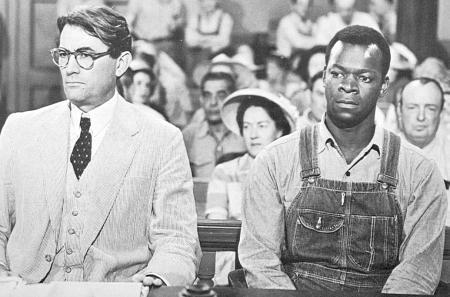 5. Discuss race issues in part 1 of the book.
 The race issues come when Atticus has to defend Tom Robinson, a "negro" who is being accused of raping a white girl. When Atticus accepts to defend Tom, a lot of people in Maycomb start bothering or seeing the Finch family as inferior because of defending the Afro American people.
6. From your reading of part 1, What does To Kill a Mockingbird teach us about how people cope with issues of race and class? Do you classify people in your world as different "folks?" Do you see those sort of distinctions today?
People were very worried about what others talked about them, but a clear example of fighting against this is Atticus, who, being criticized by the town still defended Tom Robinson and did not cared that he was a negro, he had to have the same rights. At one moment we all classify people, even if we mean no intention at all, there are the stereotypes.
7. Who is your favorite character from part 1 and why?
My favorite character from part 1 would be Atticus, he is shown responsible of his kids and the whole town. He accepts that poor family's like the Cunningham's pay him with other things than money, and he is the only white man to defend the innocence of a black man trapped in a white society.
Gender Ads Activity

Advertising is a form of communication that is used to persuade people to take some new action. The idea behind the advertising is to persuade a costumer to buy the product. It mostly used images with a few words to persuade.

We had to get in pairs and create two ads, these ads had to be Gender Ads, so one had to be directed to women and the other one to men. My partner was Nicolás Gastó, at first we didn't know what product we could use for each gender, but we finally agreed to use a Beer Advertising directed for men and a special Shampoo that would make your look better for women.
Thursday, August 23, 2012
Tuesday, July 31, 2012
Contexts and TKM Context of Production
What are Contexts?
During the week we have been preparing To Kill a Mockingbird novel, and we need to learn about the contexts. Context can be defined simply as the circumstances that surround a given text and help to specify its meaning. Context is best expressed as CONTEXTS (plural) because of the wide variety of external forces that affect the general reception or understanding of a work. Context of Production: Critical positions, historical facts, biographical aspects of the author's life. Context of Reception: Once you approach a work as a reader, the meaning that is communicated, that is sent from the text to you, is influenced by everything that you bring to it, from your reading to your personal experiences and biases.
Nelle Harper Lee Biography

Writer. Born Nelle Harper Lee on April 28, 1926, in Monroeville, Alabama. Lee Harper is best known for writing the Pulitzer Prize-winning best-seller To Kill a Mockingbird (1960)—her one and only novel. The youngest of four children, she grew up as a tomboy in a small town. Her father was a lawyer, a member of the Alabama state legislature, and also owned part of the local newspaper. For most of Lee’s life, her mother suffered from mental illness, rarely leaving the house. It is believed that she may have had bipolar disorder.
 |
| The Great Depression 1930 |
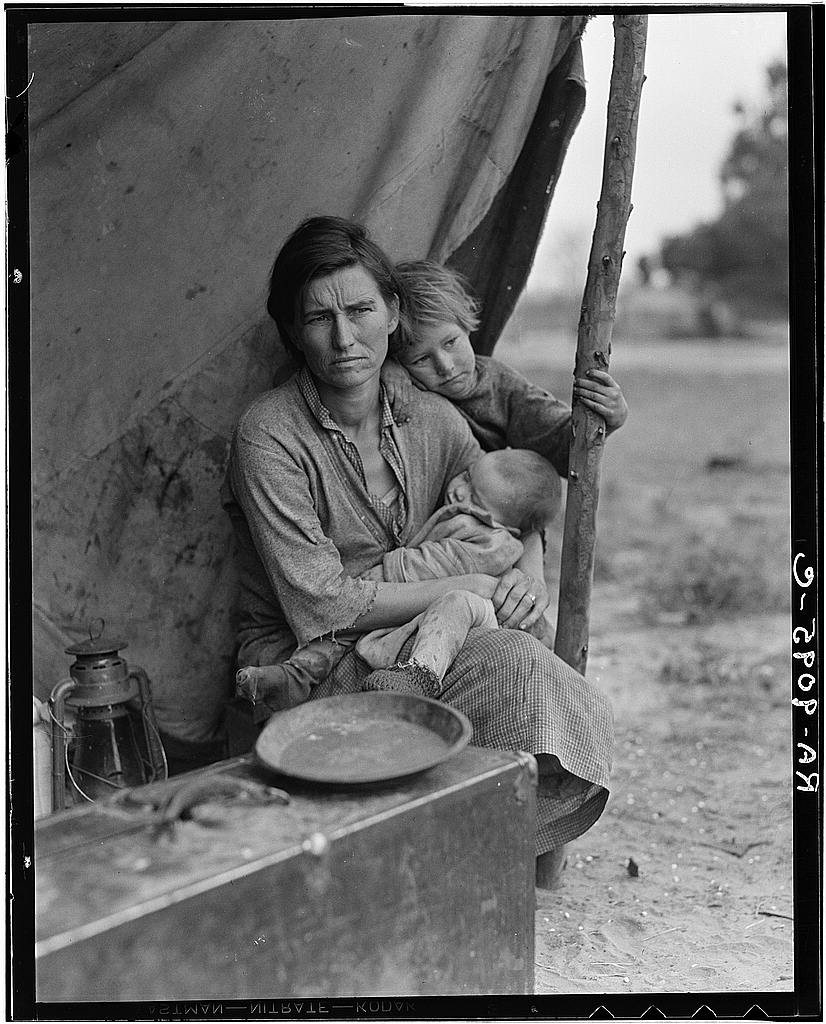
The Great Depression was a severe worldwide economic depression in the decade preceding World War II. The timing of the Great Depression varied across nations, but in most countries it started in 1930 after the passage of the United States' Smoot-Hawley Tariff bill (June 17), and lasted until the late 1930s or middle 1940s. It was the longest, most widespread, and deepest depression of the 20th century. The Great Depression had devastating effects in countries rich and poor. Personal income, tax revenue, profits and prices dropped, while international trade plunged by more than 50%, due in large part to the Smoot-Hawley Tariff. Unemployment in the U.S. rose to 25%, and in some countries rose as high as 33% .
 |
| Dust Bowl |
 |
| Afro-American Community |
During the 1930s black were already discriminated against and when the country hit the Great Depression it only got worse. White male employment was the first priority to many so blacks would have a hard time finding jobs. They often lived in the poorest districts and were paid less than white people doing the same job.
To kill a Mockingbird Chapter 1 Analysis
 1. What do you learn in this chapter about Maycomb, Atticus Finch and his family?
 Maycomb is a small town in Alabama, it has a very poor condition, especially because of the great depression that was during the 1930's. Atticus Finch is Scouts father, his wife died when Scout was 2 years old. He also has a son, Jem. He is a lawyer and his family were immigrants from England.
2. Describe Calpurnia as Scout depicts her in Chapter 1.
Scout describes her as near-sighted, squinted, and her hands were as wide as a bed slat and twice as hard. Always ordering Scout out of the kitchen, and Scout mentions she could not discuss with her because Atticus would always be by Calpurnia's side.
3. What does Dill dare Jem to do?
Dill dares Jem to go and touch the Radley place, this is were Boo Radley lived, they wanted to see how he looked like because of the years that he has been inside.
4. The townspeople of Maycomb have some fears and superstitions about the Radley place.
Describe these fears and superstitions.
They were afraid that on the Radley place lived a "malevolent phantom", Boo Radley.
5. How important is bravery to Jem?
Very much, as Scout's only brother he had to prove that he could protect her at all cause.
6. What do you notice about the narrative voice and viewpoint of the story?
It is narrated by Scout, to give a innocent point of view or perspective of the story.
Subscribe to:
Posts (Atom)